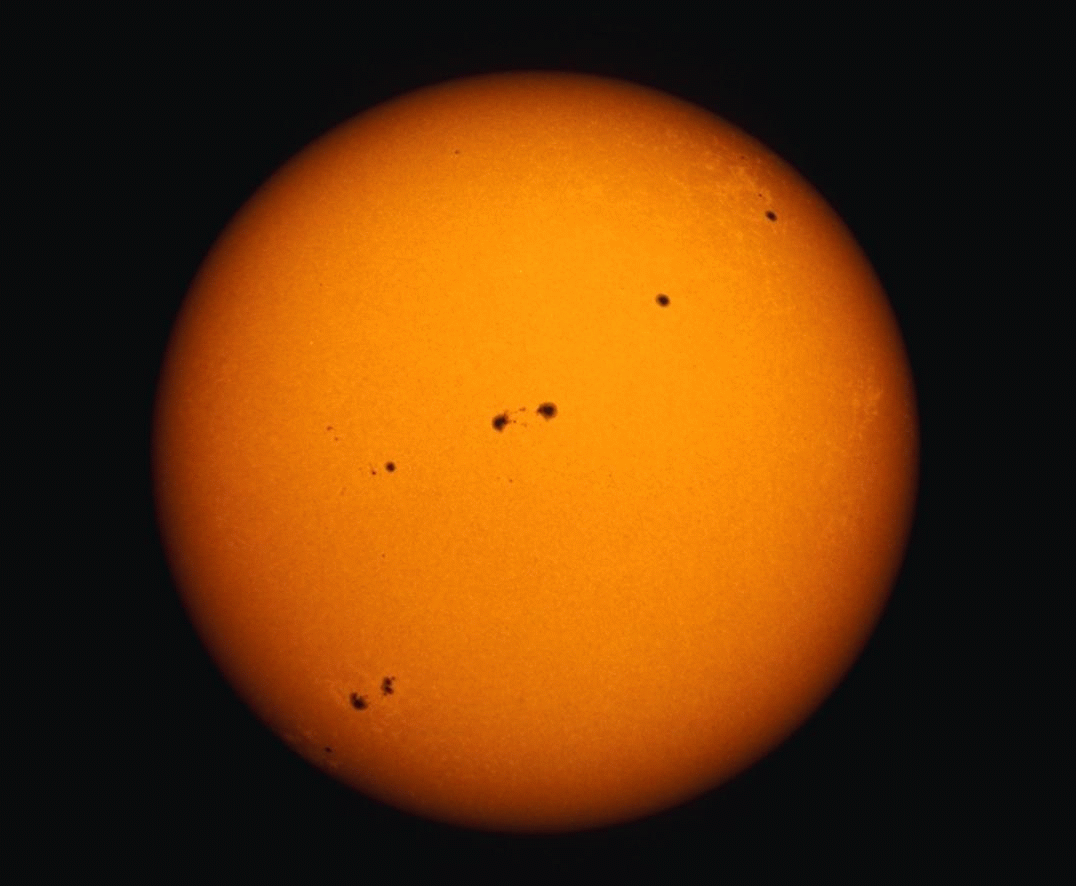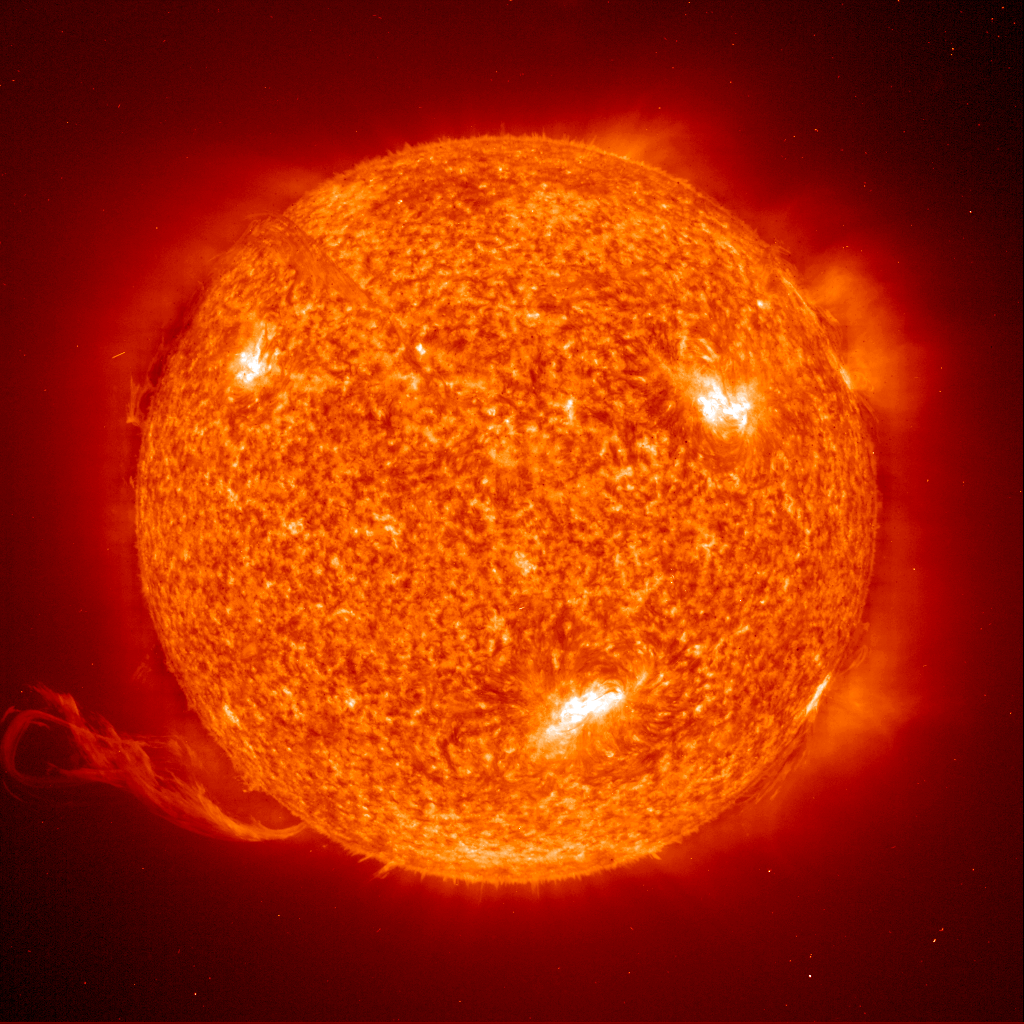
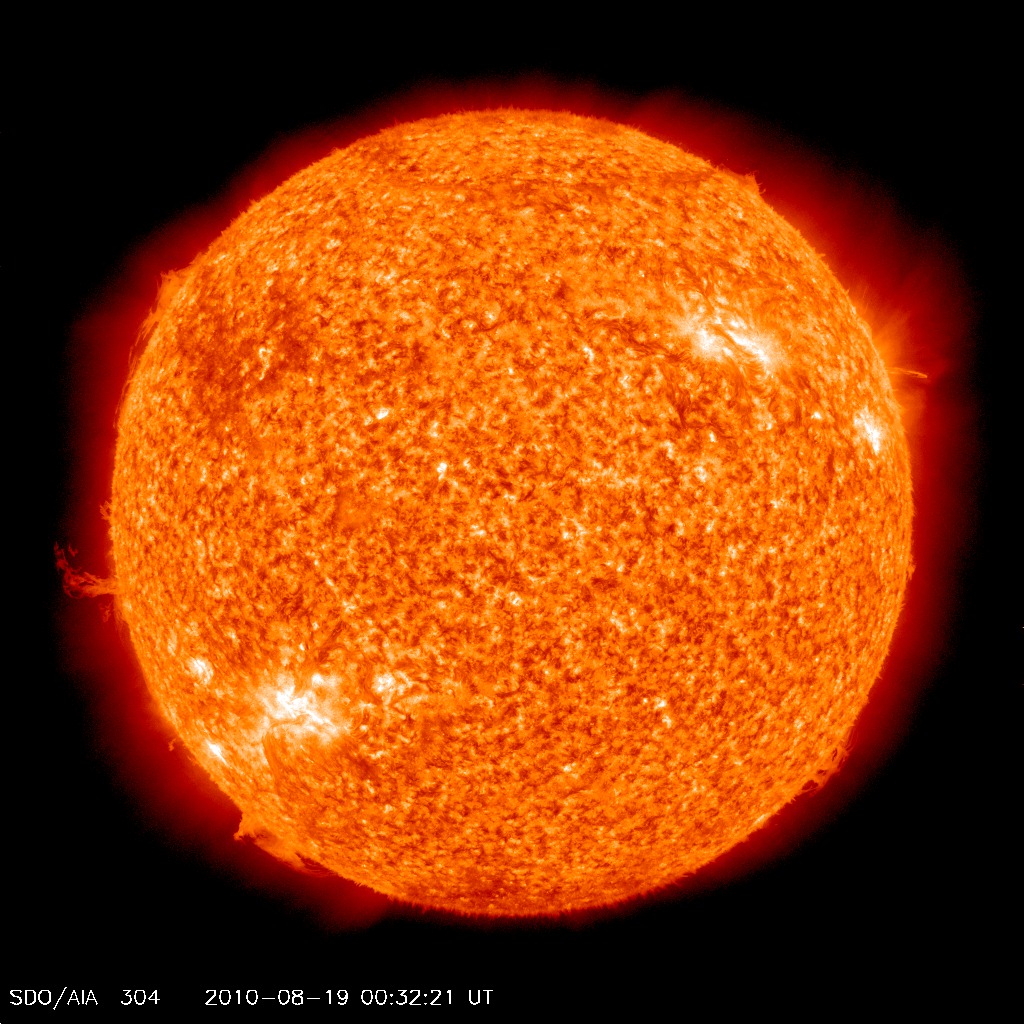
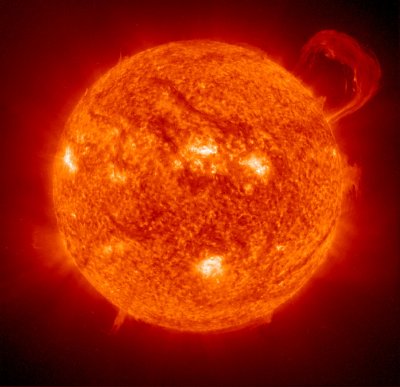
The Sun is the closest star to Earth and the largest element of the Solar System. The stars are the only bodies in the universe that emit light. The Sun is also our main source of energy, which is manifested mainly in the form of light and heat. The Sun contains more than 99% of all matter in the Solar System. It exerts a strong gravitational pull on the planets and spins around. The Sun was formed 4,650 million years ago and has fuel for 5,000 million. Then begin to get bigger and bigger, until it becomes a red giant. Finally, it will sink under their own weight and become a white dwarf, which may take a trillion years to cool. Structure and Composition.jpg?timestamp=1374129914551) From Earth we only see the outer layer. It is called the photosphere and has a temperature of about 6000°C, with cooler areas (4,000ºC) we call sunspots. The Sun is a ball that can be divided into concentric layers. The core is the middle of the sun located from the center to about .2 radii. It's density can reach up to 150,000 kg/m. That is 150 times the density of water! The temperature averages arouns 13,600,000 Kelvin. The core is different from the rest of th eparts on the sun in that it is the only place that heat is develeped by fusion, where the rest of the sun is heated by energy transferred outward from the core. After traveling through many layers and finally reaching the Photosphere, the energy is released into space as sunlight and kinetic energy. Solar EnergySolar energy is created inside the Sun, where the temperature reaches 15 million degrees, with a high pressure, which causes nuclear reactions. Releasing protons (hydrogen nuclei), which merge into groups of four to form alpha particles (helium nuclei). Each alpha particle weighs less than the four protons together. The difference is ejected toward the surface of the sun as energy. One gram of solar material releases as much energy as the combustion of 2.5 million gallons of gasoline. Energy generated in the Sun's core takes a million years to reach it's surface. Every second turn 700 million tons of hydrogen into helium ashes. Are released in the process 5 million tons of pure energy, therefore, the sun becomes increasingly lighter. The Sun also absorbs matter. It's so big and has such fueza that often attracts asteroids and comets passing close. Naturally, they fall to the Sun, disintegrate and become part of the star. Sunspots
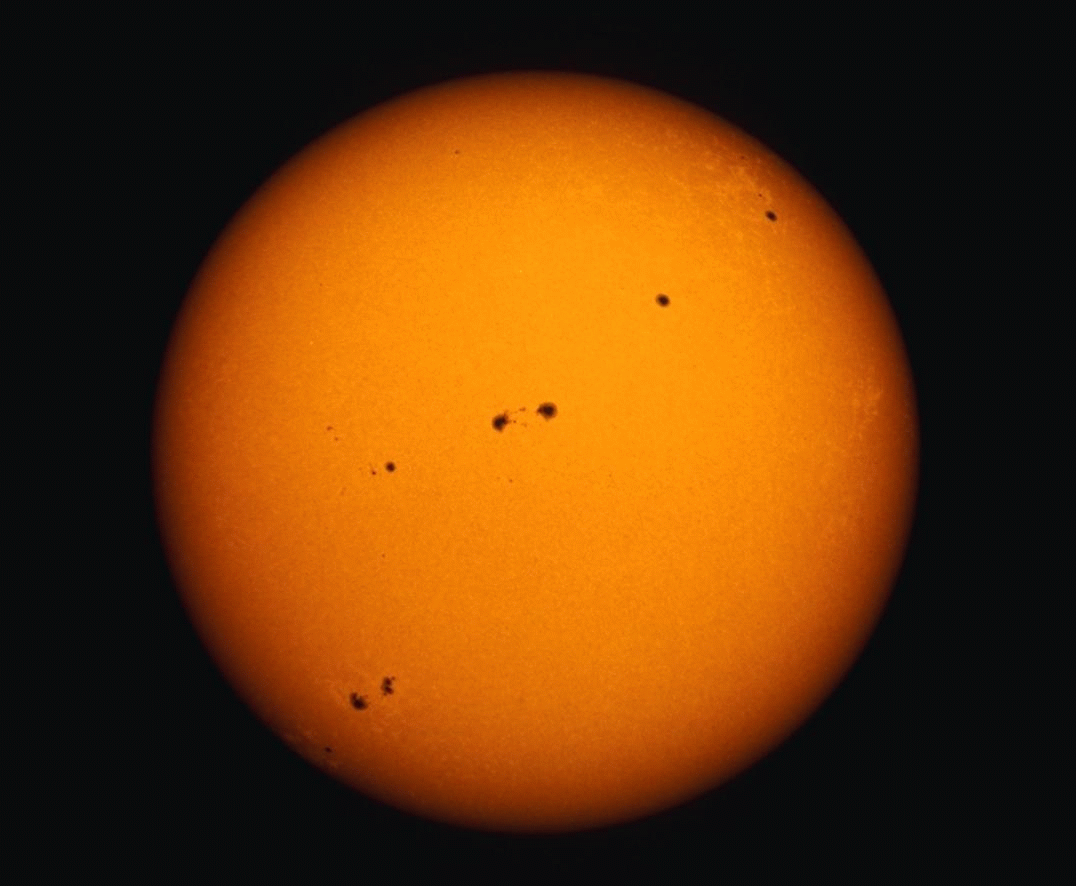
Sunspots have a dark central part called umbra, surrounded by a lighter region called the penumbra. Sunspots are dark because they are cooler than the surrounding photosphere. The spots are the place of strong magnetic fields. The reason why cold sunspots are not yet understood, but one possibility is that the magnetic field in the spots allows convection beneath them. Sunspots generally grow and last from several days to several months. The sunspot observations revealed first that the Sun rotates in a period of 27 days (as seen from Earth). The number of sunspots on the Sun is not constant, and changes over a period of 11 years known as the solar cycle. Solar activity is directly related to this cycle. Solar Prominences
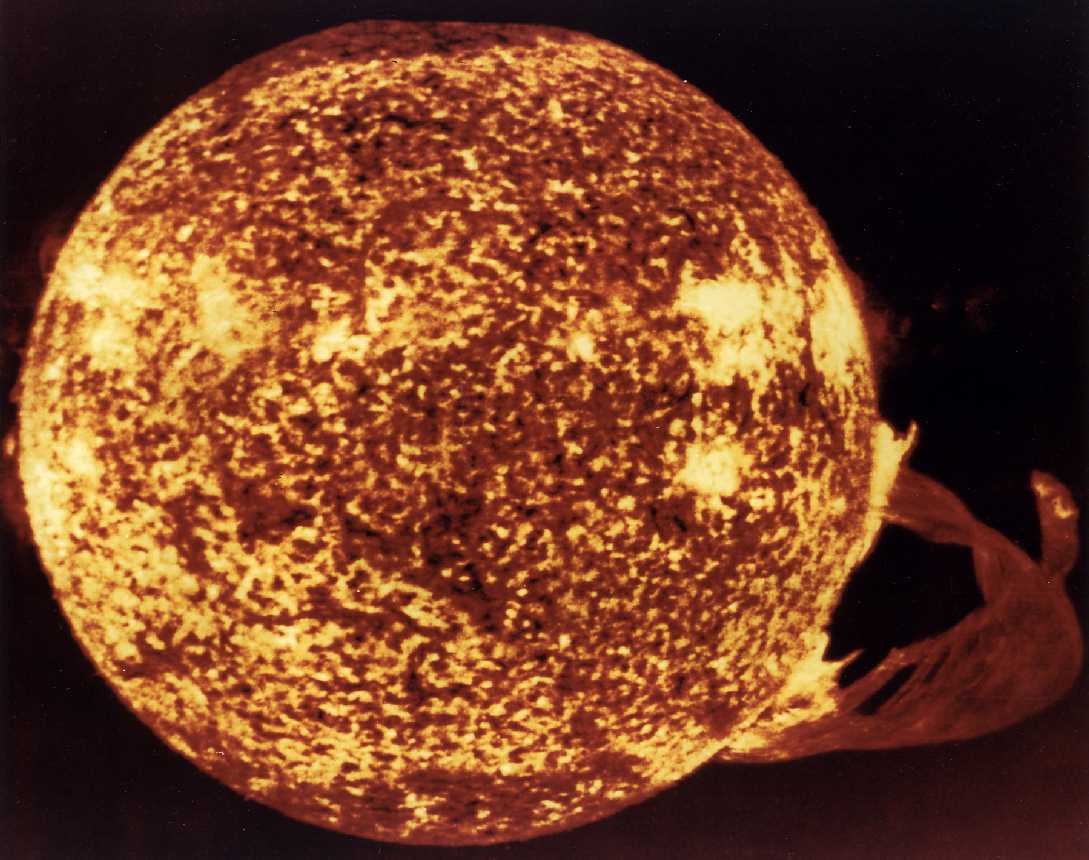
The solar flares are huge jets of hot gas ejected from the sun's surface, extending to many thousands of miles. The biggest flares can last several months. The Sun's magnetic field deflects some bumps that form a giant bow well. They occur in the chromosphere which is about 100,000 degrees. The bumps are spectacular phenomena. They appear in the limb of the Sun as flaming clouds in the upper atmosphere and lower crown and consist of clouds of material at lower temperature and higher density than its surroundings. Temperatures in the central portion are approximately one hundredth of the temperature of the crown, while its density is about 100 times that of the corona environment. Therefore, gas pressure inside the protrusion is approximately equal to its surroundings. Solar Wind
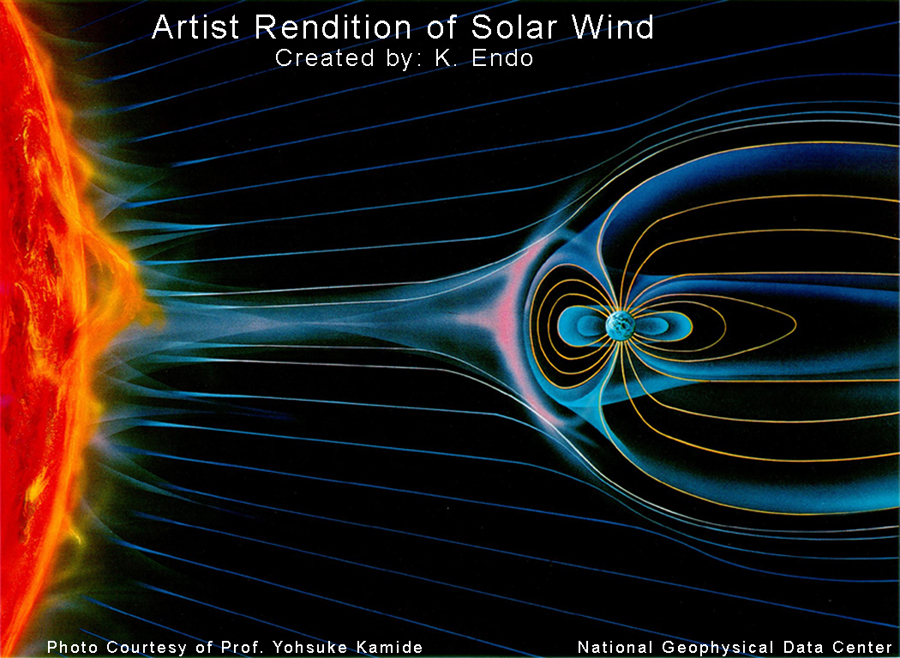
The solar wind is a stream of charged particles, mostly protons and electrons that escape the Sun's outer atmosphere at high speeds and penetrate the Solar System. Some of these charged particles are trapped by the terrestrial magnetic field spiraling along the lines of force from one to another magnetic pole. The northern and southern lights are the result of interactions of these particles with air molecules. The solar wind speed is about 400 kilometers per second in the vicinity of Earth's orbit. The point where the solar wind is coming from other stars is called the heliopause, and is the theoretical limit of the solar system. Is at about 100 AU from the Sun The space within the boundary of the heliopause, containing the Sun and the solar system, is called the heliosphere. |
|
|||||||||
.jpg)